
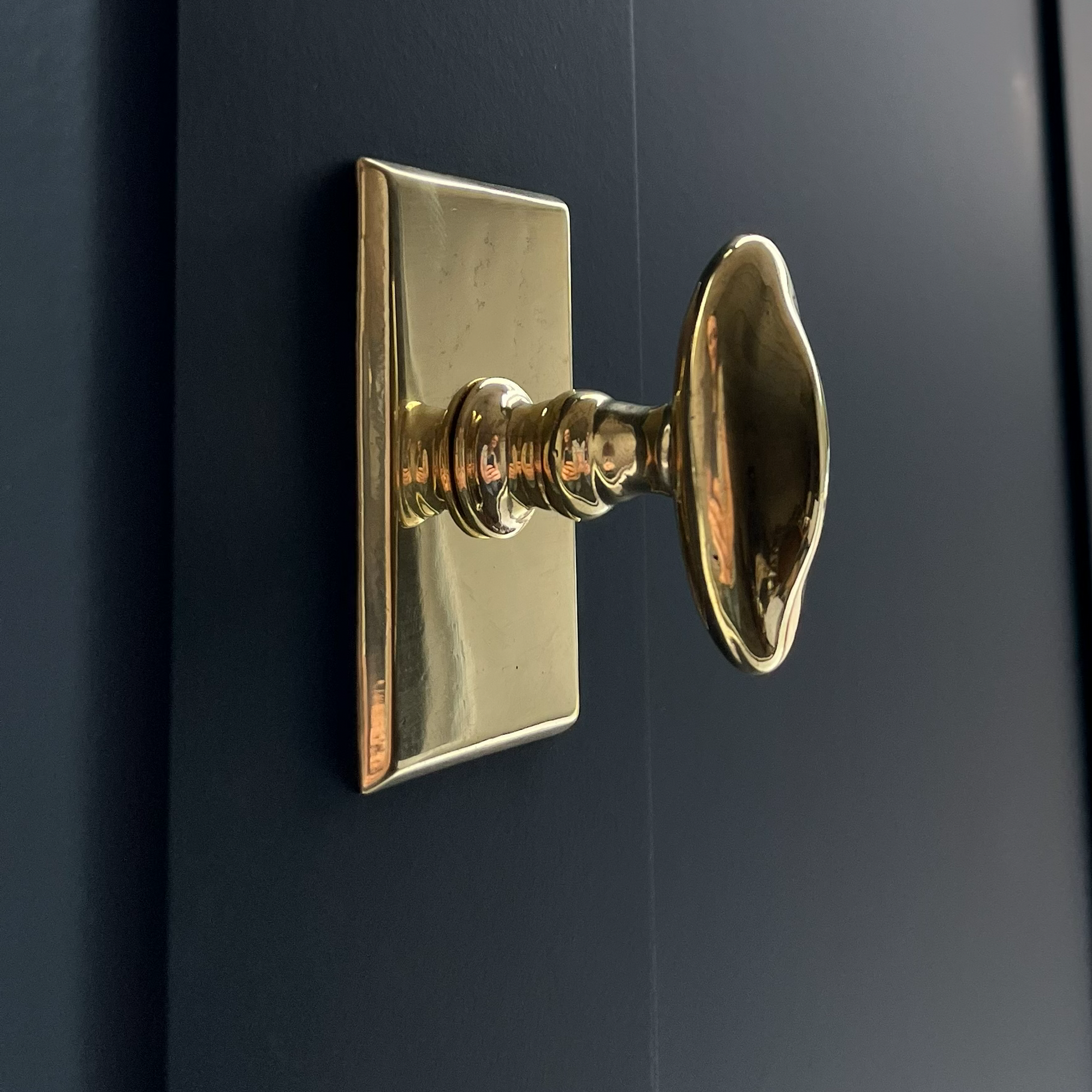
Whether you live in or are restoring a historic house, the choice of brass fittings is a unique opportunity to add a personal touch. Each piece is a testament to your individuality and could make a significant difference in your home décor.
At our workshop in Devon, we hand craft our brassware using a traditional blend of locally cast brass, which is then finished by hand with a personal touch of love and care. This unique connection to our hand-crafted hardware guarantees the highest quality and authenticity in every piece, allowing us to be a part of our craft.
We avoid using lacquers or aging fluids, opting instead to fume the brass for a naturally aged finish. Additionally, we provide a copying service for any unusual fittings or those that may have been lost to history.
Our top priority has always been to assist as many customers as we can. From our humble beginnings with restorers to contemporary interior designers. By replicating period hardware and dating these pieces, we create a lasting narrative for our products and help to uncover the history of the buildings they adorn.
Our team, with their extensive experience, regularly work with historical architects and interior designers on high profile buildings, including Palaces, Stately homes, and Grade 1 and 2 listings. This wealth of expertise ensures we find the right balance between authenticity and practicality.
The most vital aspect of our work is the history embodied in these fittings. By reviving these pieces, we ensure that their legacy endures, which is truly special to us.
Our reproductions allow homeowners to revive the elegance and craftsmanship of these historical periods, infusing spaces with nostalgia and a sense of heritage.
Please reach out to us by phone at +44 (0) 1398 331515 or via email info@optimumbrasses.co.uk if you require our replica services or would like to arrange a site visit.
Popular Hardware For Historic Houses
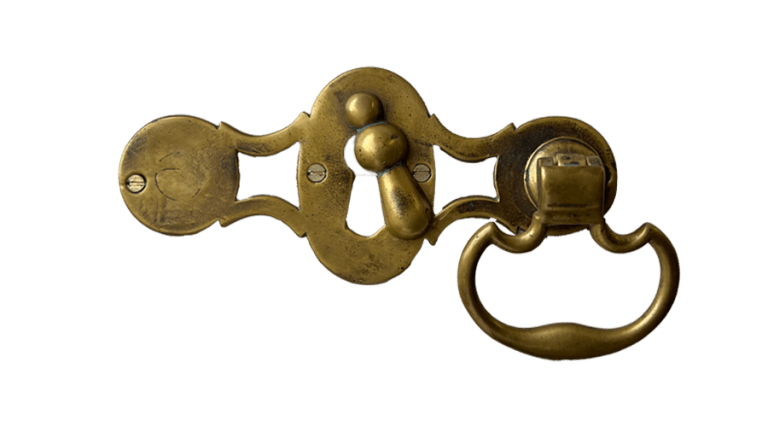

Privacy Lock Plates
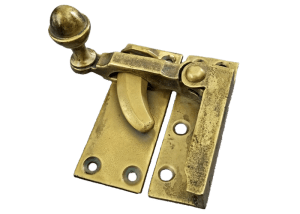
Sash Window Catches
Military & Inset Handles
We supply an extensive selection of fittings ideal for period and heritage properties. The examples above highlight some of the ironmongery held within our supplementary stock. These pieces aren’t available for online purchase, but you can click the link below to request further information or discuss ordering options.
Sash Window Brass Hardware
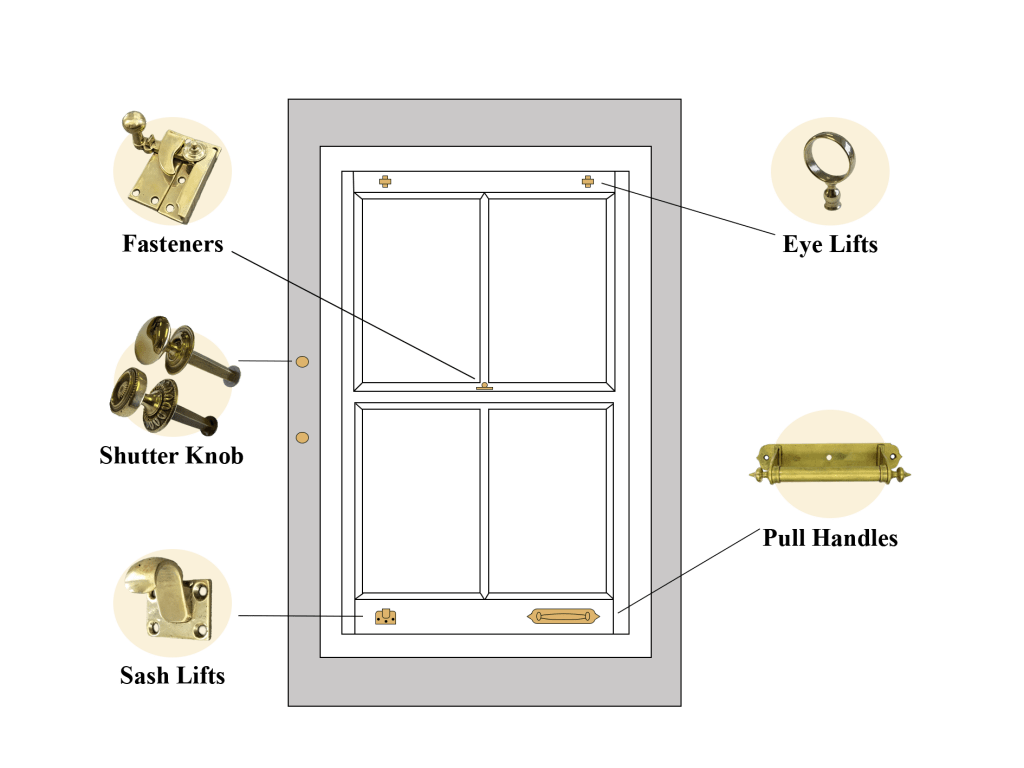
Sash windows are a hallmark of traditional British architecture, admired for their elegant proportions and timeless appeal. Commonly found in Georgian, Victorian, and Edwardian homes, they add both charm and authenticity to period style properties.
We offer a range of beautifully hand crafted sash window hardware including lifts, fasteners, pull handles and more all made to complement original designs.
These fittings are available upon request; please use the link below to enquire about availability and ordering.
Preserving Character Through Authentic Hardware
At Optimum Brasses, we regularly welcome owners of historic homes from Tudor manor houses to Edwardian townhouses, who are seeking fittings that truly reflect the age and character of their property.
In period homes, hardware is not simply a finishing detail. It is part of the architectural language of the building. The wrong handle or hinge can disrupt centuries of design continuity. The right one completes the narrative.
Authenticity Over Convenience
In modern interiors, practicality often dictates choice. In historic homes, authenticity should lead.
Original furniture fittings were designed in harmony with:
- The proportions of cabinetry
- The materials used (oak, mahogany, walnut, pine)
- The craftsmanship techniques of the period
- The social and architectural influences of the era
While modern mass-produced fittings may offer convenience, they rarely carry the subtle detailing, correct scale, or historically accurate shaping required in a period setting.
True restoration respects:
- Correct silhouettes
- Appropriate fixing methods
- Period-accurate proportions
- Traditional materials such as solid brass, bronze, or iron
Where possible, we encourage property owners to prioritise authenticity. Practicality can be sensitively integrated but never at the expense of character.
Period Evolution of Furniture Hardware
Understanding how hardware evolved helps ensure fittings are selected appropriately for the age of a home.
Tudor Period (1485–1603)
Hardware during the Tudor era was robust, hand-forged and functional.
- Heavy strap hinges
- Pear and fishtail drop handles
- Visible hammer marks
- Large iron or early brass fittings
Furniture was constructed primarily from oak, and fittings reflected strength and durability. Ornamentation was limited and bold rather than refined.
Transition:
Moving into the late 17th century, fittings began to show more refinement as brass casting techniques improved.
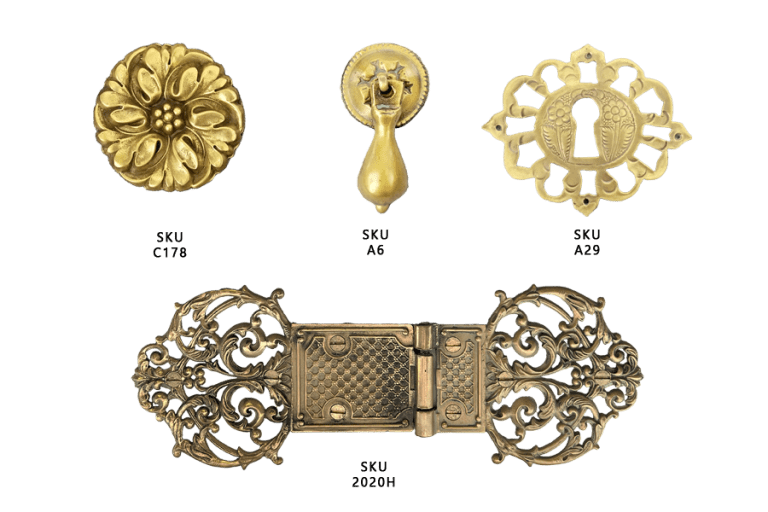
William & Mary (1689–1702)
This late 17th-century period introduced early decorative brass fittings.
- Pear drop handles with shaped backplates
- Fish tail drop pulls
- Engraved escutcheons
- Increased use of cast brass
Compared to Tudor hardware, fittings became lighter and more decorative, reflecting the growing sophistication of cabinetmaking.
Transition:
The move into Georgian design brought symmetry and classical influence.
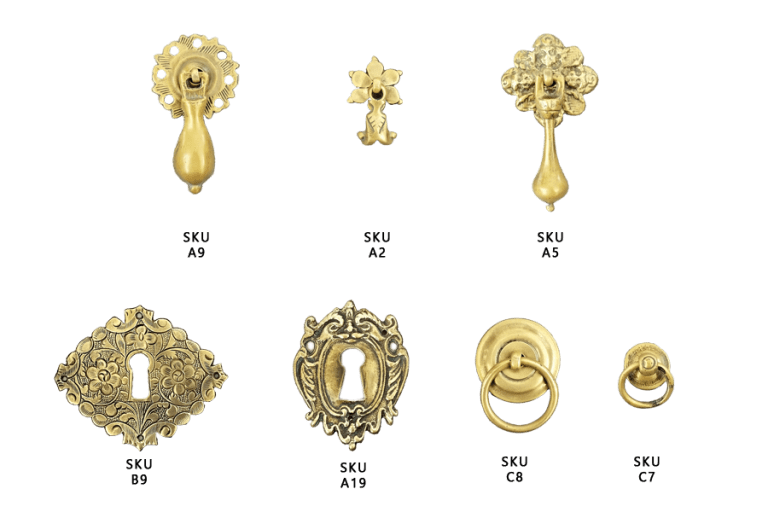
Georgian Period (1714–1830)
Defined by balance, proportion, and classical inspiration.
Early Georgian:
- Swan neck loop handles
- Simple brass knobs
- Elegant escutcheons
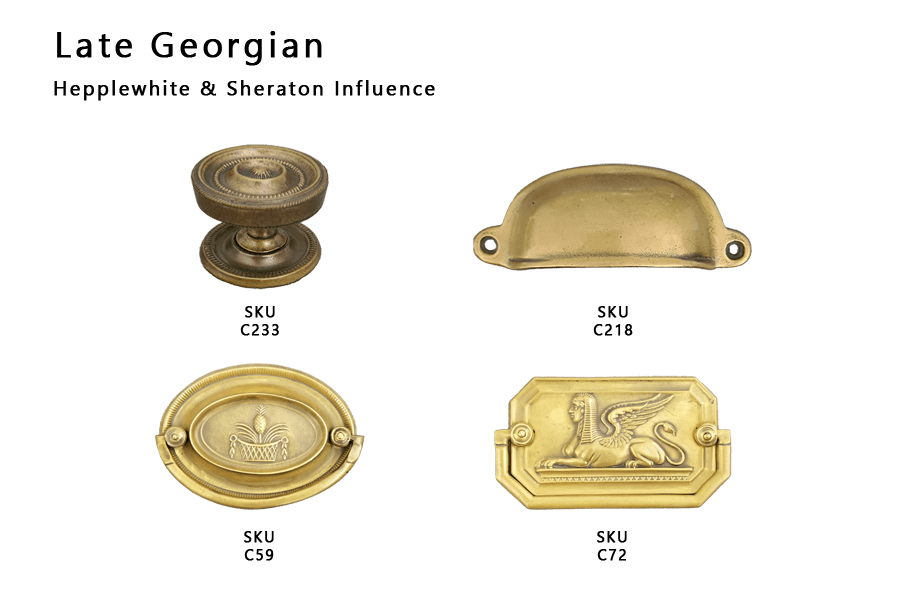
Late Georgian (Hepplewhite & Sheraton influence):
- Pressed oval plate handles
- Refined cup pulls
- Slimmer profiles
- More precise casting and stamping techniques
Hardware became more delicate, reflecting the lighter furniture styles of the era.
Transition:
As Britain entered the Regency period, elegance intensified but ornamentation remained controlled.
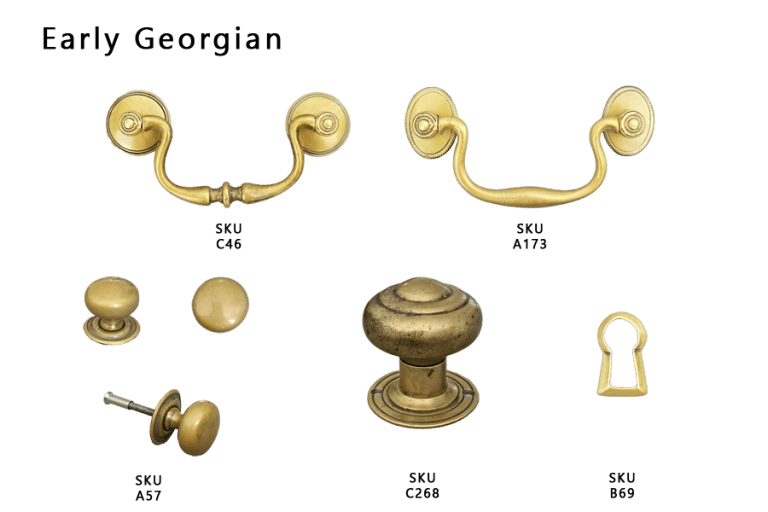
Regency Period (1811–1820)
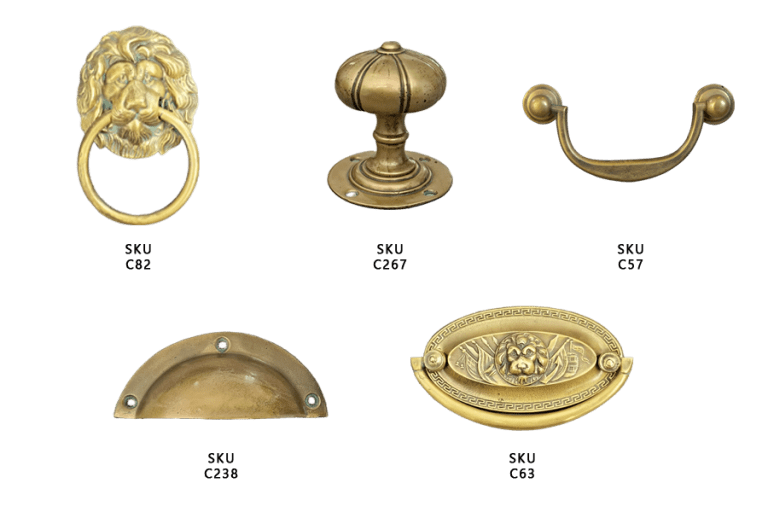
Regency fittings reflect refinement and architectural influence.
- Lion head ring pulls
- Elegant backplates
- Polished brass finishes
- Slim proportions
Compared to late Georgian hardware, Regency fittings often carry a subtle decorative flourish, yet remain restrained.
Transition:
The Victorian era introduced industrial production and greater ornamentation.
Victorian Period (1837–1901)
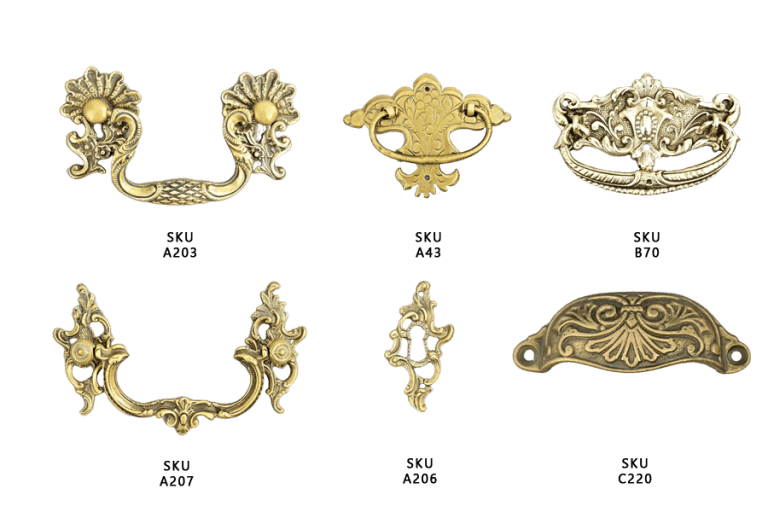
With the Industrial Revolution came mass production and heavier detailing.
- Engraved plate handles
- Military campaign flush pulls
- Decorative backplates
- Heavier brass weights
Victorian hardware differs significantly from Georgian simplicity. It is often more expressive and ornate, reflecting Gothic and revivalist influences.
Transition:
By the Edwardian period, tastes began to simplify once again.
Edwardian Period (1901–1910)
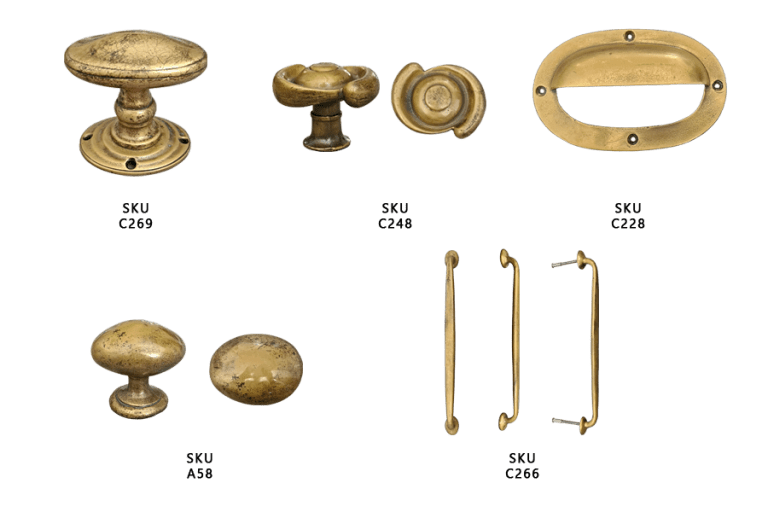
A return to lighter, brighter interiors.
- Oval knobs
- Simplified cup pulls
- Subtle detailing
- Balanced proportions
Compared to Victorian hardware, Edwardian fittings are less heavy and less decorative. They bridge traditional craftsmanship with early modern sensibility.
A Guide for Historic Home Owners
When selecting fittings, consider:
- The construction date of your property
- Whether the room reflects original design or later alteration
- The timber species used in cabinetry
- The scale and weight of the furniture
- Whether you are restoring, replicating, or sympathetically modernising
If unsure, we are always happy to guide you toward the most historically appropriate option.